-1.png?height=40&name=Logo%20Eversports%20Horizontal%20(1)-1.png)
Here are the topics covered in this article; click on them to be redirected to the corresponding instructions:
- Which customers booked the most in my studio ?
- Which customers paid the most in my studio ?
- Which bookings were cancelled, and which customers didn't show up?
- Which customers have bought a trial product but did not buy any other products yet ?
- Where can I check the customers whose products will expire soon ?
- What is the average occupation of each of my activities ?
- Which customers purchased one product but not another? (Example: customers with an active membership who did not purchase insurance)
💡 New to Analytics & Reports? Start with Everything You Need to Know About Analytics for the KPIs, charts, and reports built right into your Manager.
1. Which customers booked the most in my studio ? |
Where to find the export :
Bookings export in Analytics > Reports > Customers with bookings
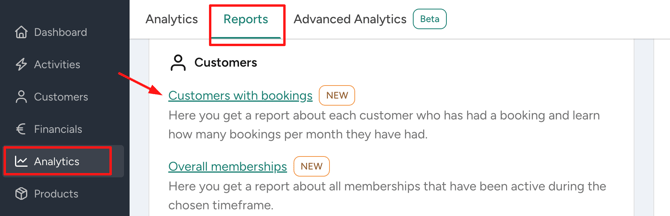
Result:
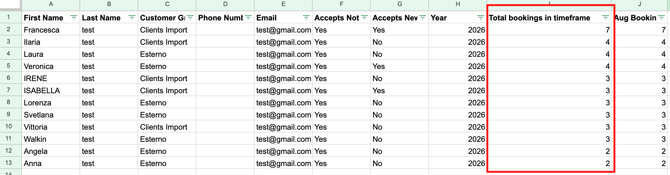
Optional : you can verify the total bookings number for 1 or 2 customers : check the profile of one of the customers in the Manager > click on “Past visits” > verify the filters: they should match the period you exported and the filters you used in Google Sheet / Excel.
The number on top should match the number in your “Total bookings” column :

2. Which customers paid the most in my studio ? |
- In your Manager, go to Financials > Reports > CSV EXPORT OF ALL INVOICES WITH PAYMENTS (do not forget to select the period in the top right corner) :
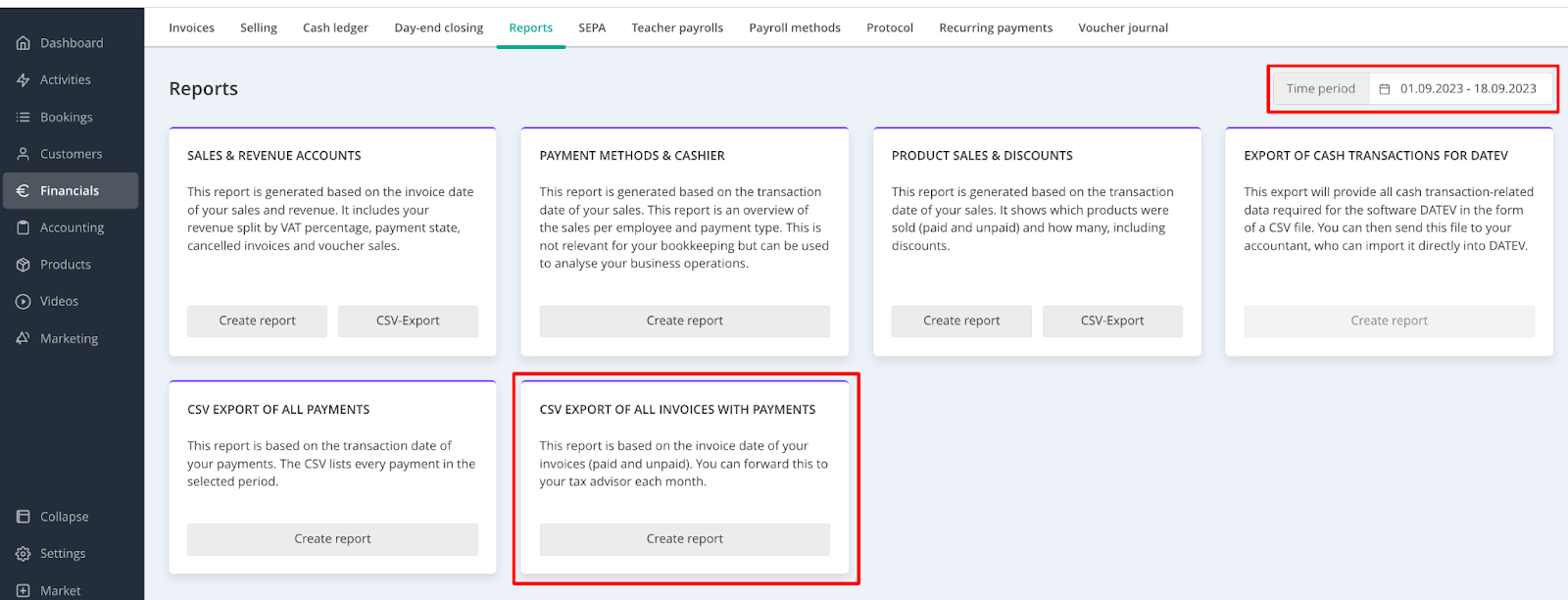
- Open the export in Google sheet or Excel.
- Keep the columns: Customer / Email / End price and delete the other ones.
- Select everything and click on the filter icon.
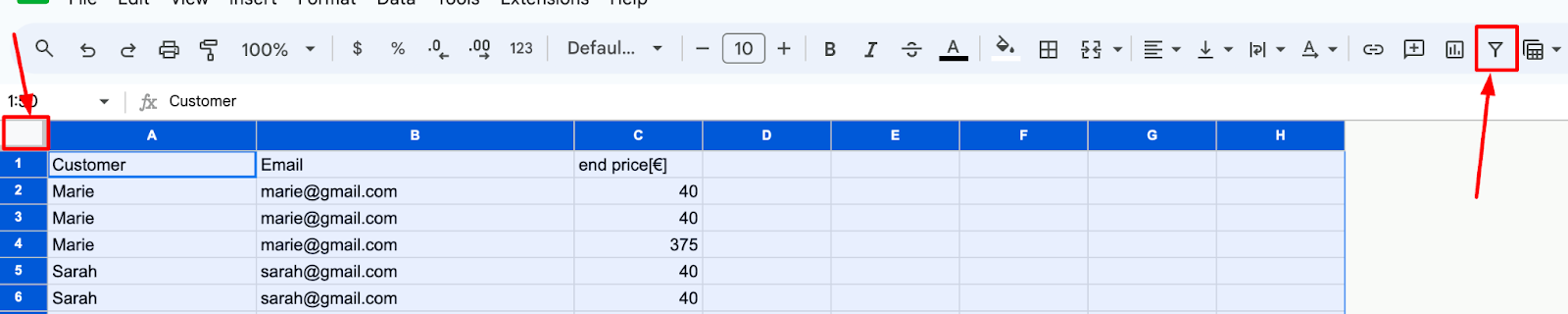
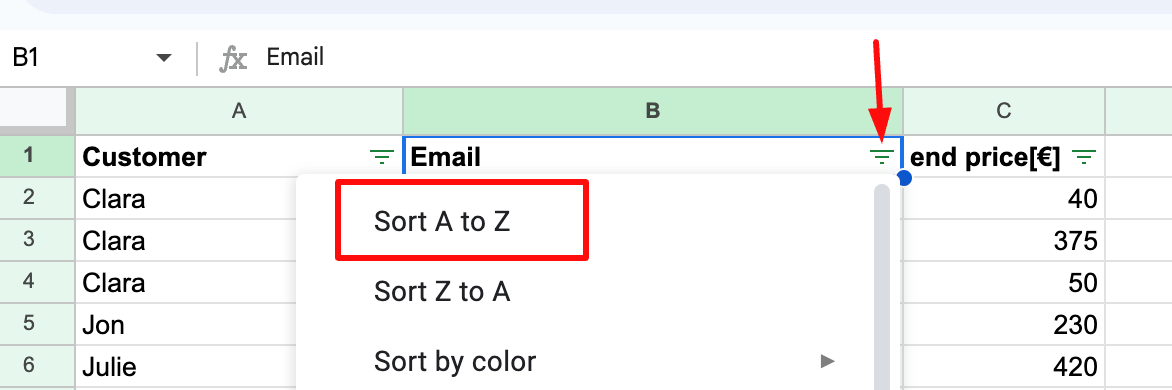
- Sort the column “Email” from A to Z :
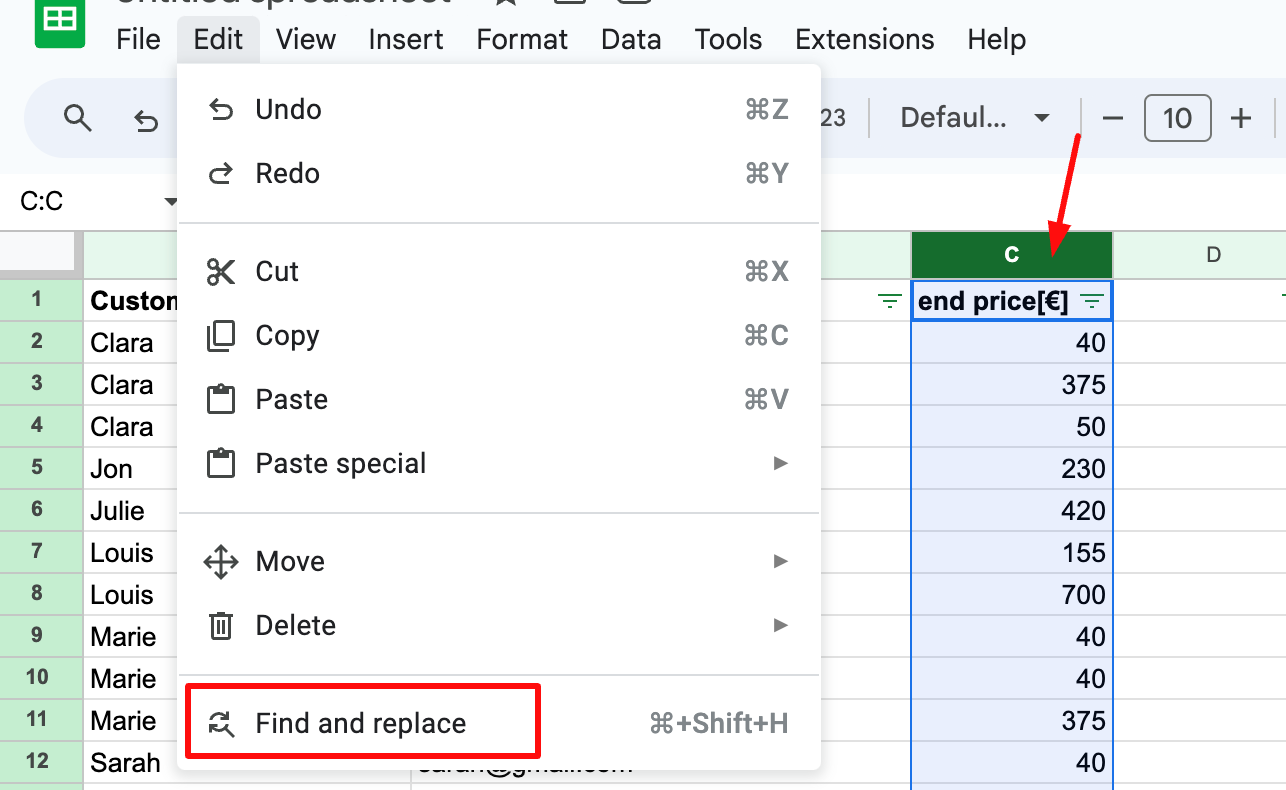
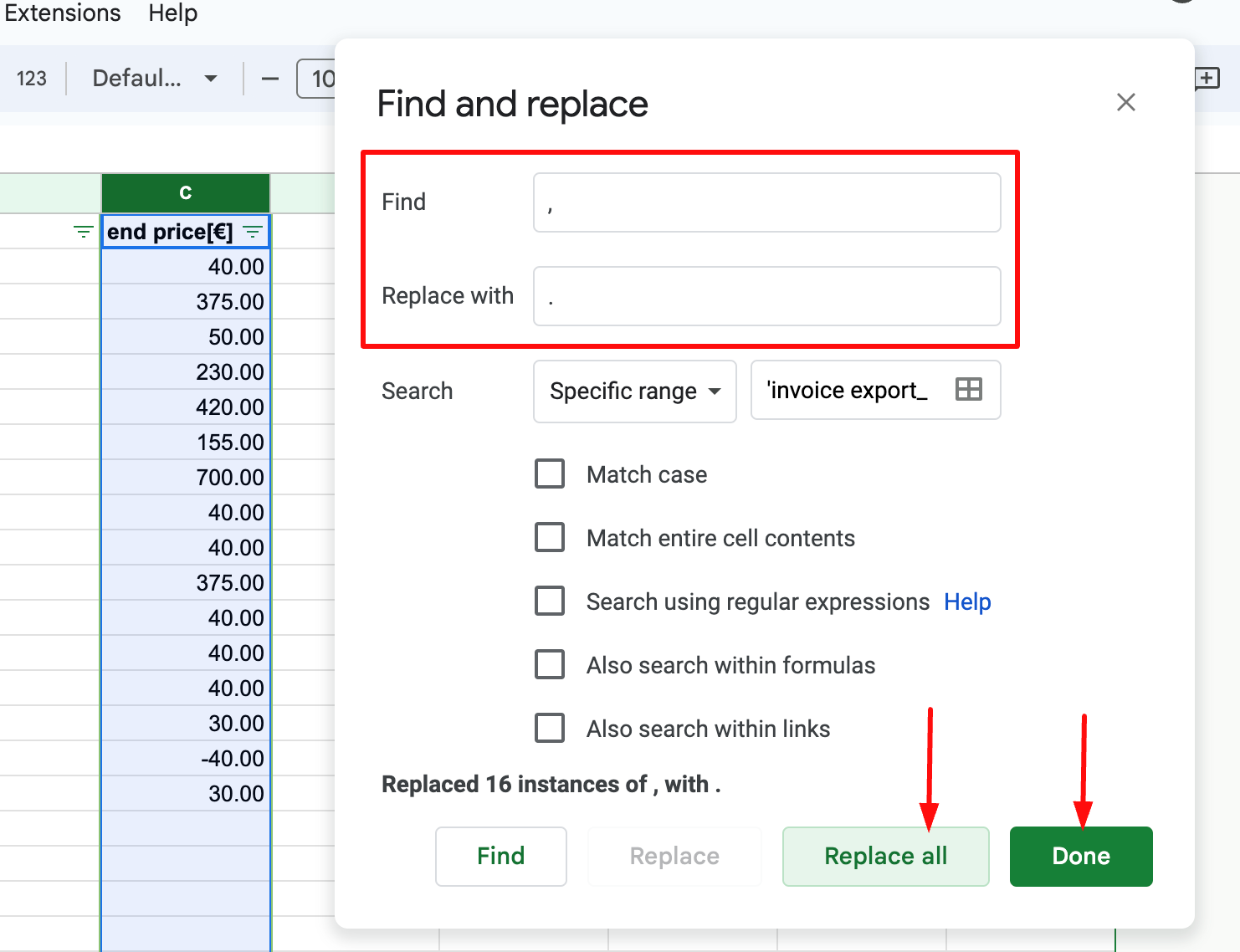
- If you see commas in the “End price” column, replace the commas by points (select the column > Edit > Find and replace) :
- In a new column > add the formula =SUMIF(B:B,B2,C:C)
B being the column with the emails
B2 the first email box
C the final price column
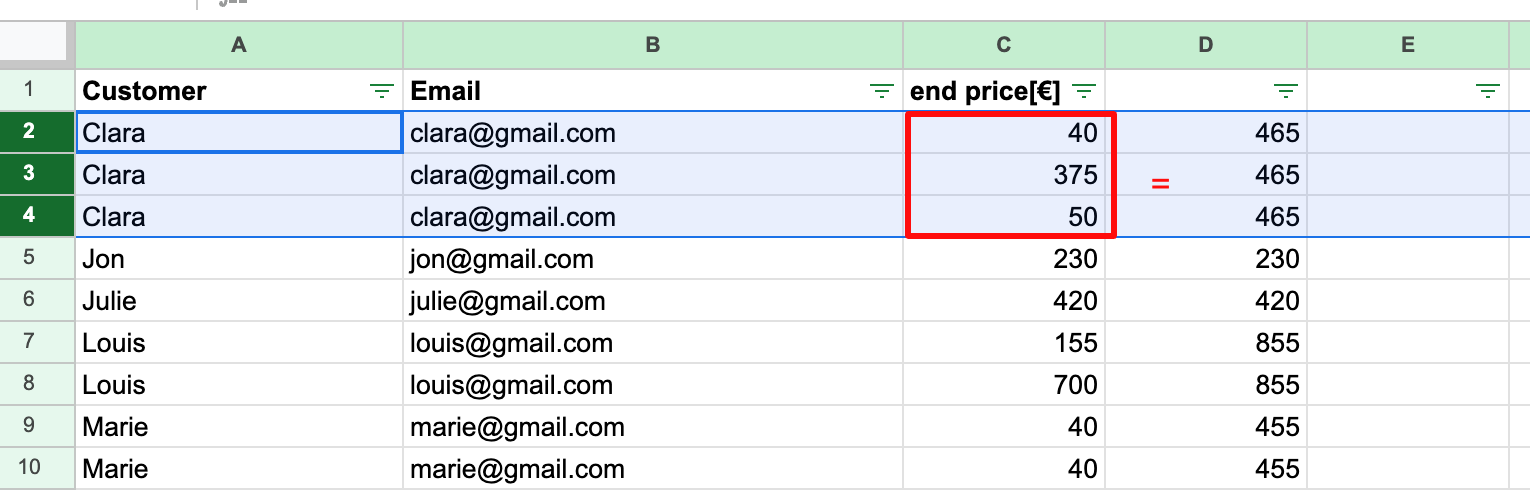
- You can verify the formula by calculating the sum of the amounts in column “End price” for a customer :
- Extend the formula over the entire column.
- Copy the column and paste only the values into a new column (you can call this new column “Total payments” for instance).
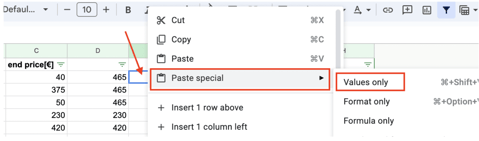
- The previous column and the “End price” one can be deleted.
- Select everything and click on the filter icon (so the new column is included in the filters).
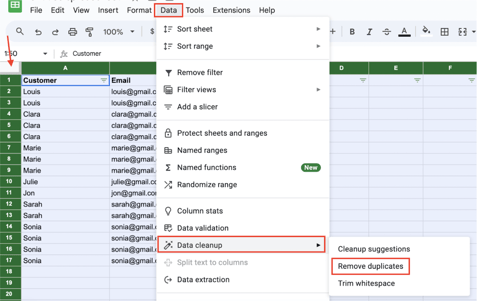
- Now you need to remove duplicates. Select everything again and go to Data > Data Cleanup > Remove duplicates :
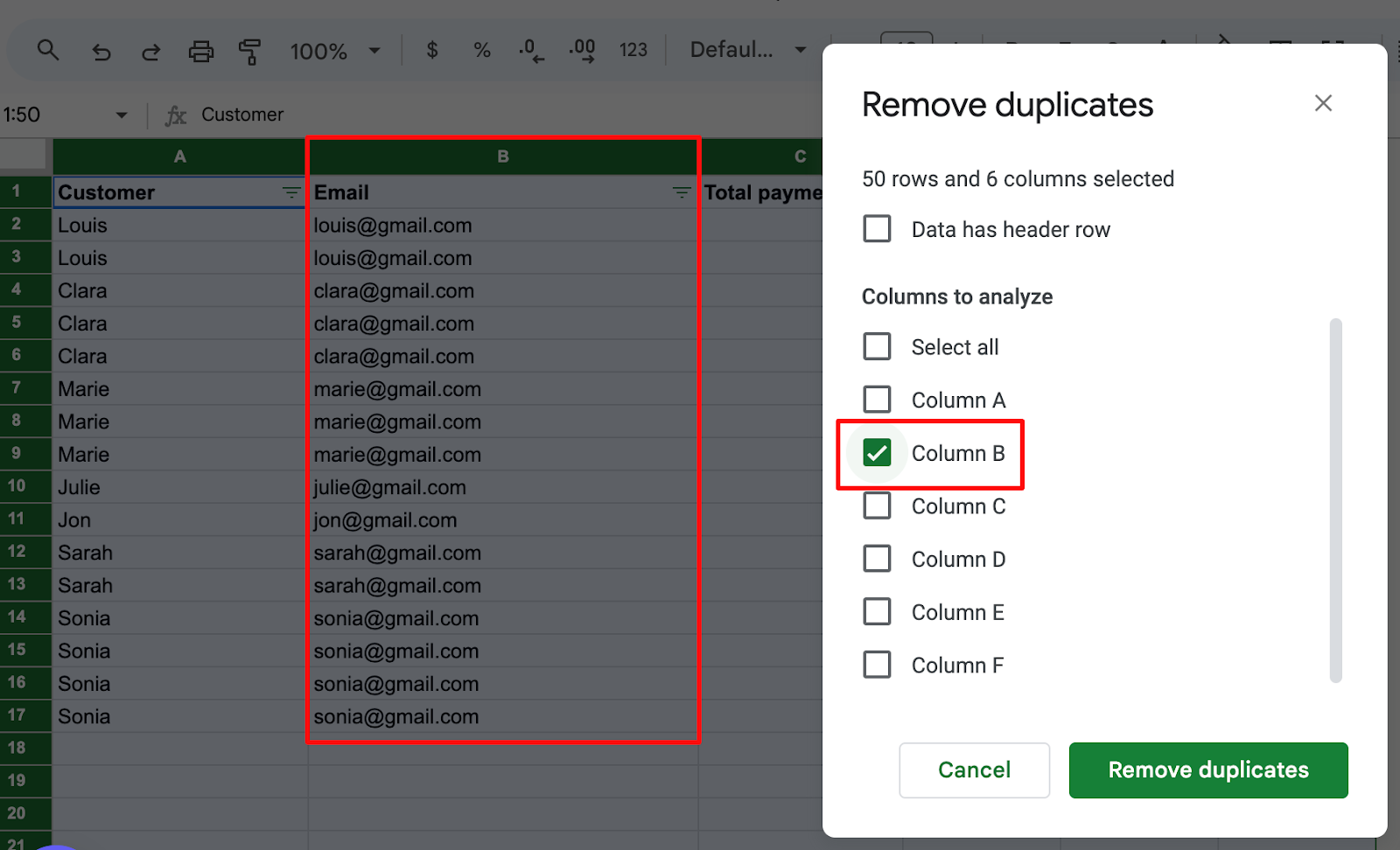
- Select only the column with email addresses :
- Optional 1: Sort this column “Total payments” from Z to A (this way, the clients with most payments will appear first).
- Optional 2: Set column to €
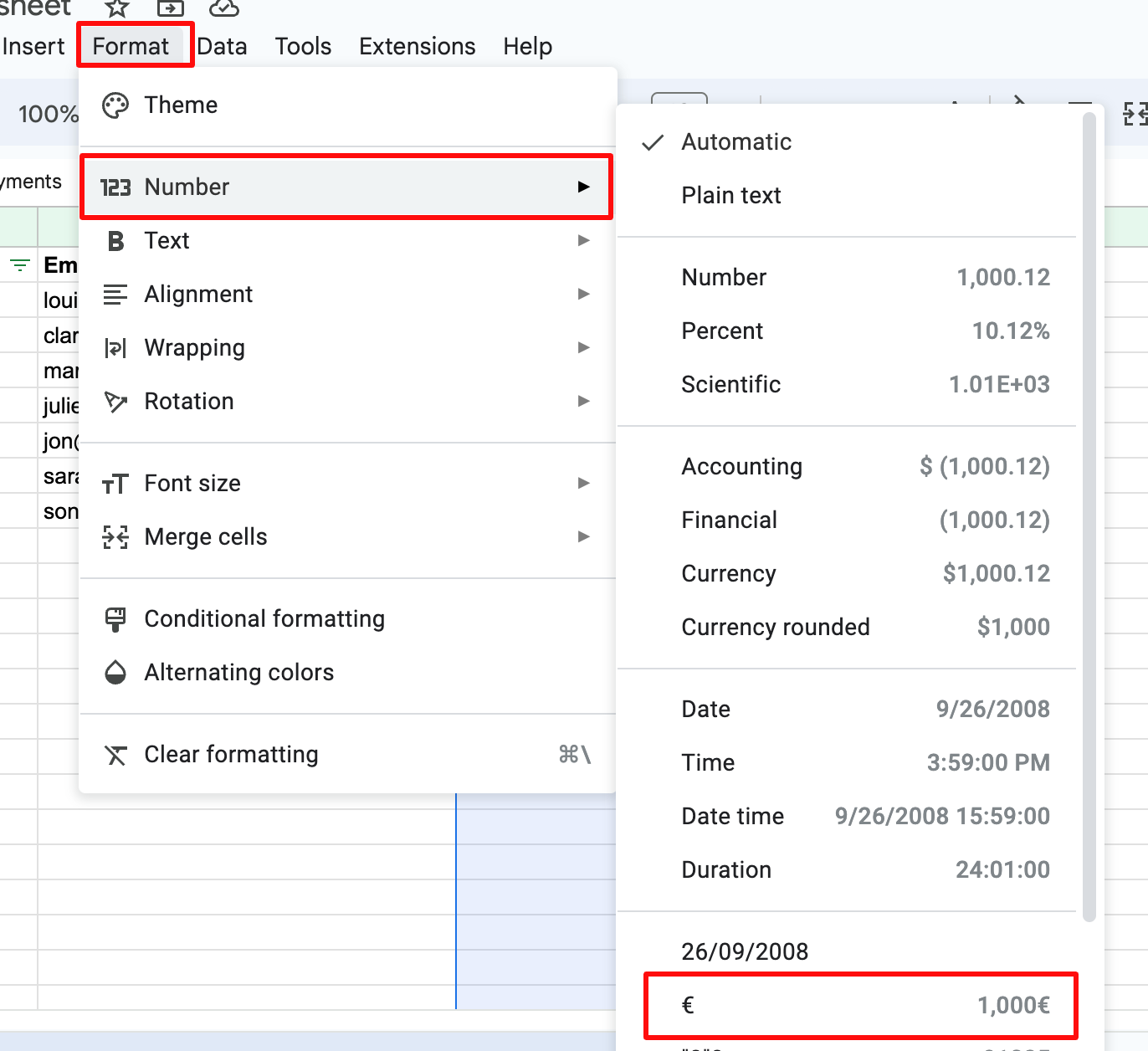
- Optional 3: you can verify the amount for 1 or 2 customers : check the profile of one of the customers in the Manager > click on “See all invoices” > verify the number that is shown in green at the top of the page.
- ✅ It is done ! You can now see the total amount of payments for each customer :
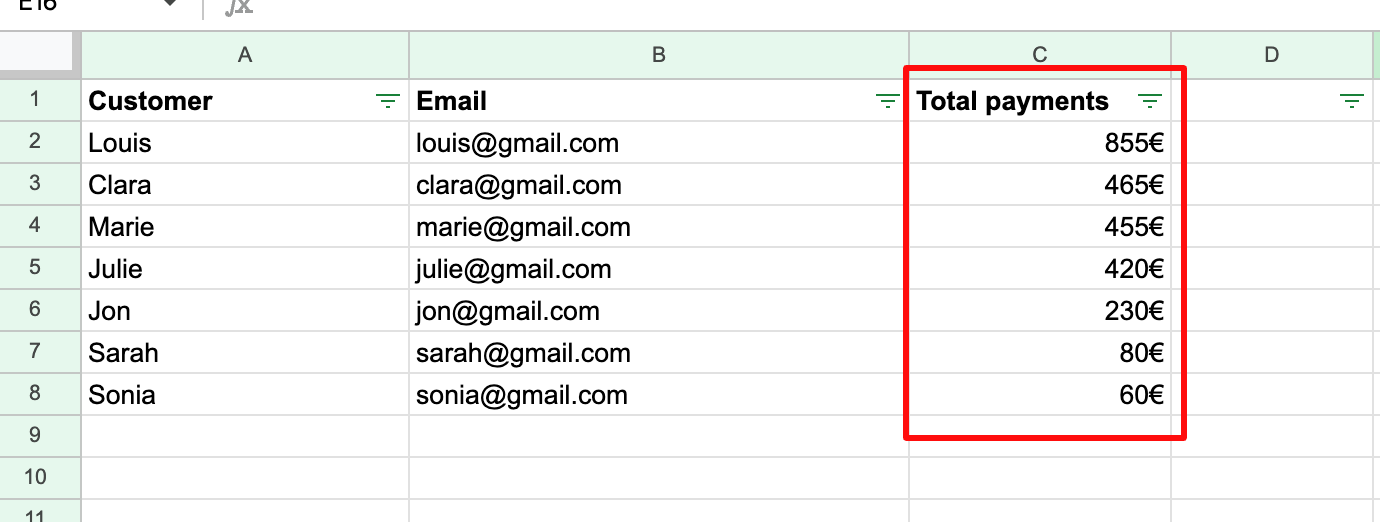
Note: the amount will match if you have done an export of the payments since your started with Eversports.
3. Which bookings were cancelled, and which customers didn't show up? |
Get a clear overview of cancelled bookings and customers who didn't attend.
💡 Use these reports to:
- Adjust your cancellation policy.
- Spot classes with unusually high no-show rates to optimize your schedule.
- Identify customers who repeatedly miss bookings.
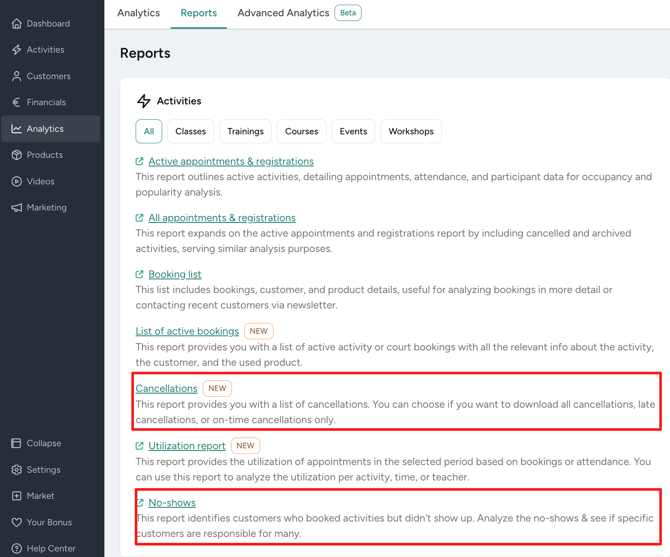
Want to penalise customers who don't cancel and/or don't show up?
👉 Learn more about No-show & Late cancellation Penalty feature!
4. Which customers have bought a trial product but did not buy any other products yet ? |
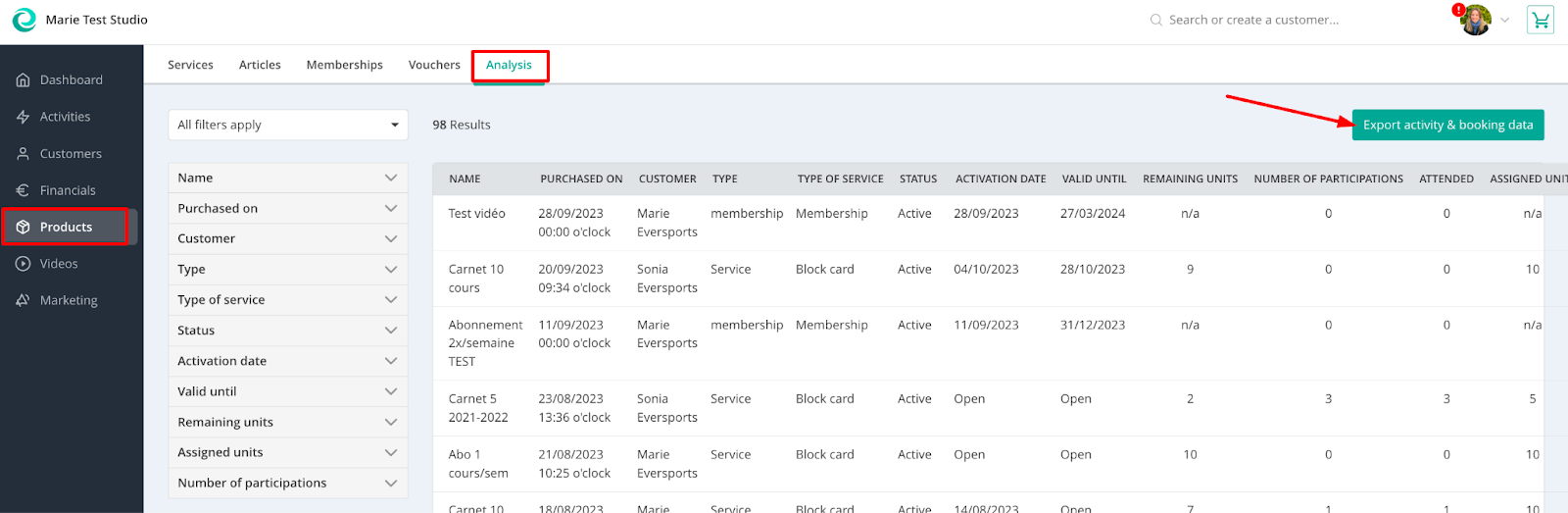
- In your Manager > go Products > Analysis > click on “Export activity & booking data” in the top right-hand corner :
- Open the export in Google sheet or Excel.
- Keep at least the columns: Name (of the product), Customer and Email. The other ones are optional.
- Select everything and click on the filter icon.
- Filter the column “Email” from A to Z.
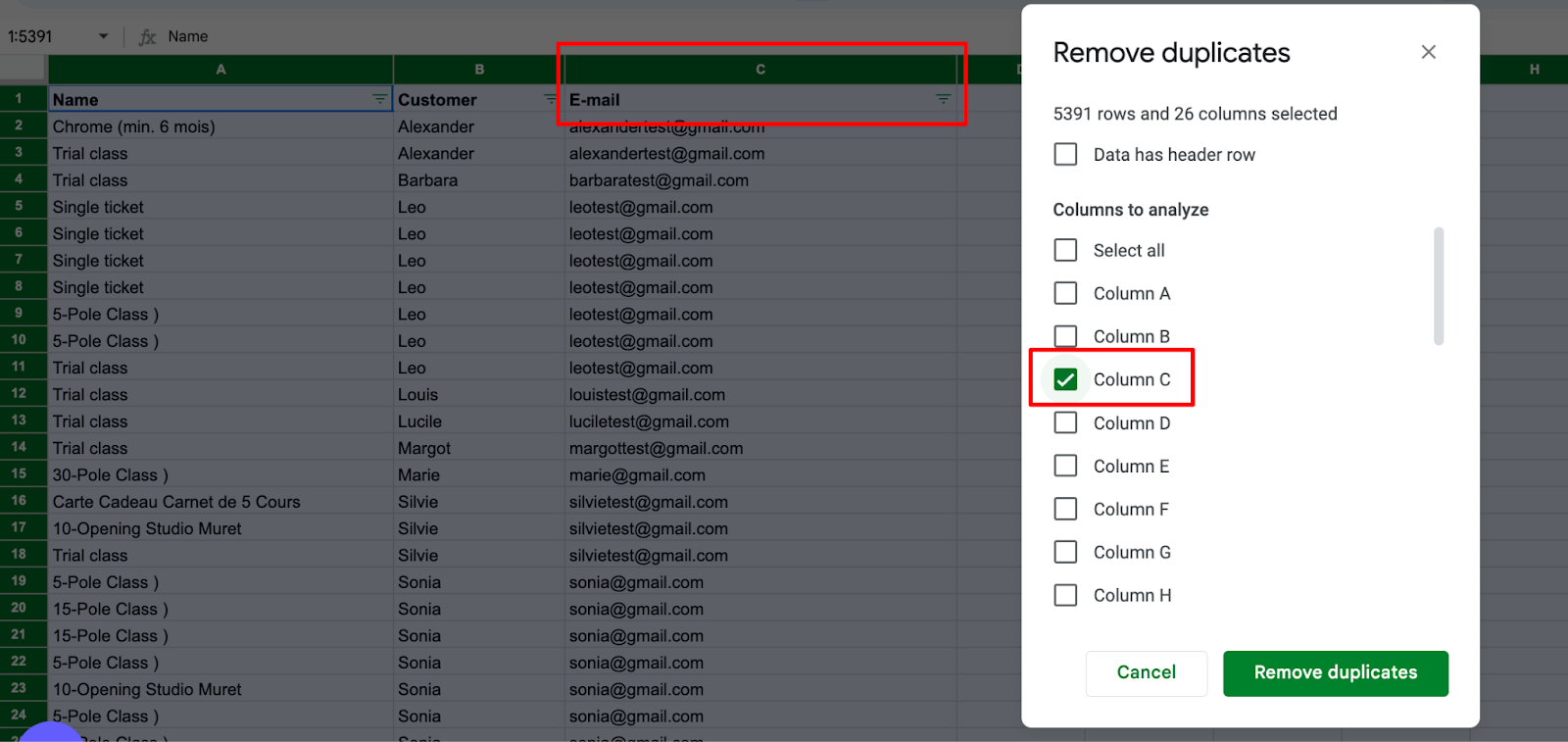
- Now you need to remove duplicates. Select everything again and go to Data > Data Cleanup > Remove duplicates
- Select only the column with email addresses :
- In the column “Name” > filter and keep only the trial product(s) :

- It is done ! All the customers listed here have not bought another product than the trial one(s) 🙂
5. Where can I check the customers whose products will expire soon ? |
- Open your Eversports Manager.
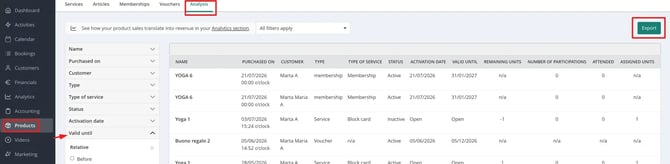
- Go to Products > Analysis and use the following filters:
- Status : is : active
- Valid until : if you want to know which product will expire by the end of the month for example, select Absolut : before : ../../....
6. What is the average occupation of each of my activities ? |
This serves to compare your actual bookings per activity with the maximum number of participants possible for the same activity
- Open your Eversports Manager
- Go to the Analytics Section, in the tab "Reports”
- Click on “Utilization report ”
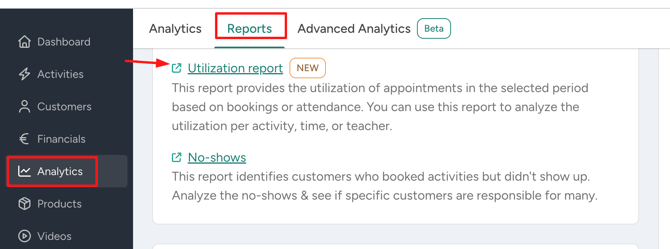
✅ As a final result you should then see the following:

💡 What to do about it: Use this to decide whether to add, remove, or resize classes based on what's working.
7.Which customers purchased one product but not another? (Example: customers with an active membership who did not purchase insurance) |
In your Manager > go to Products > Analytics
Export 1: Filter customers who purchased Product A (e.g., memberhsip)
click “Export” in the upper-right corner to obtain the list.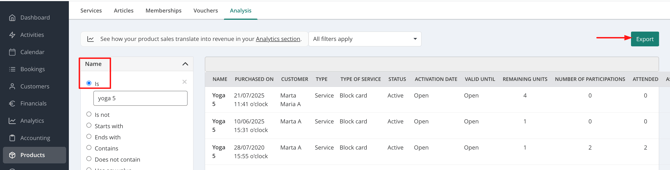
Export 2: Customers who purchased Product B (e.g., insurance)
click “Export” in the upper-right corner to obtain the list.
In your spreadsheet, open both exports and keep only the Email column. In a new column, enter this formula in cell C2:
=IF(COUNTIF(B:B, A2)=0, "Not in List 2", "Present")
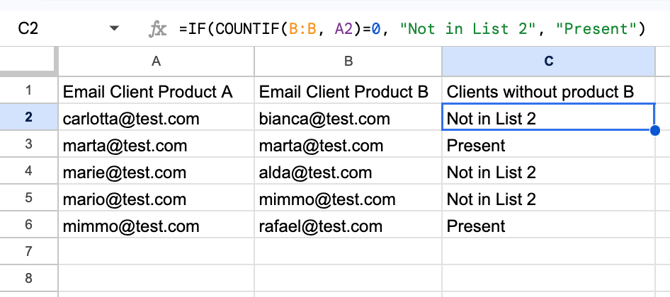
This formula checks whether the email address in A2 (customers who purchased Product A) exists in column B (customers who purchased Product B).
If the email address is not found, “Not in List 2” is displayed (the customer did not purchase Product B).